Skip to content
Maui Braces Orthodontics — Braces & Invisalign in Kahului, Makawao & Lahaina
FAQ background

Frequently Asked Questions

Orthodontic FAQ — Braces & Invisalign on Maui

Everything you need to know about orthodontic treatment, oral hygiene during treatment, and what foods to avoid.

Oral Hygiene During Treatment

It's extremely important to keep your gums and teeth clean during orthodontic treatment. Poor oral hygiene can result in the formation of "white spot lesions", or permanent scars, on your teeth.

Recommended Cleaning Tools

  • Electric toothbrush
  • Water flosser
  • Plaque-indicating toothpaste (PlaqueHD)
  • Interproximal flossers
  • Braces floss picks
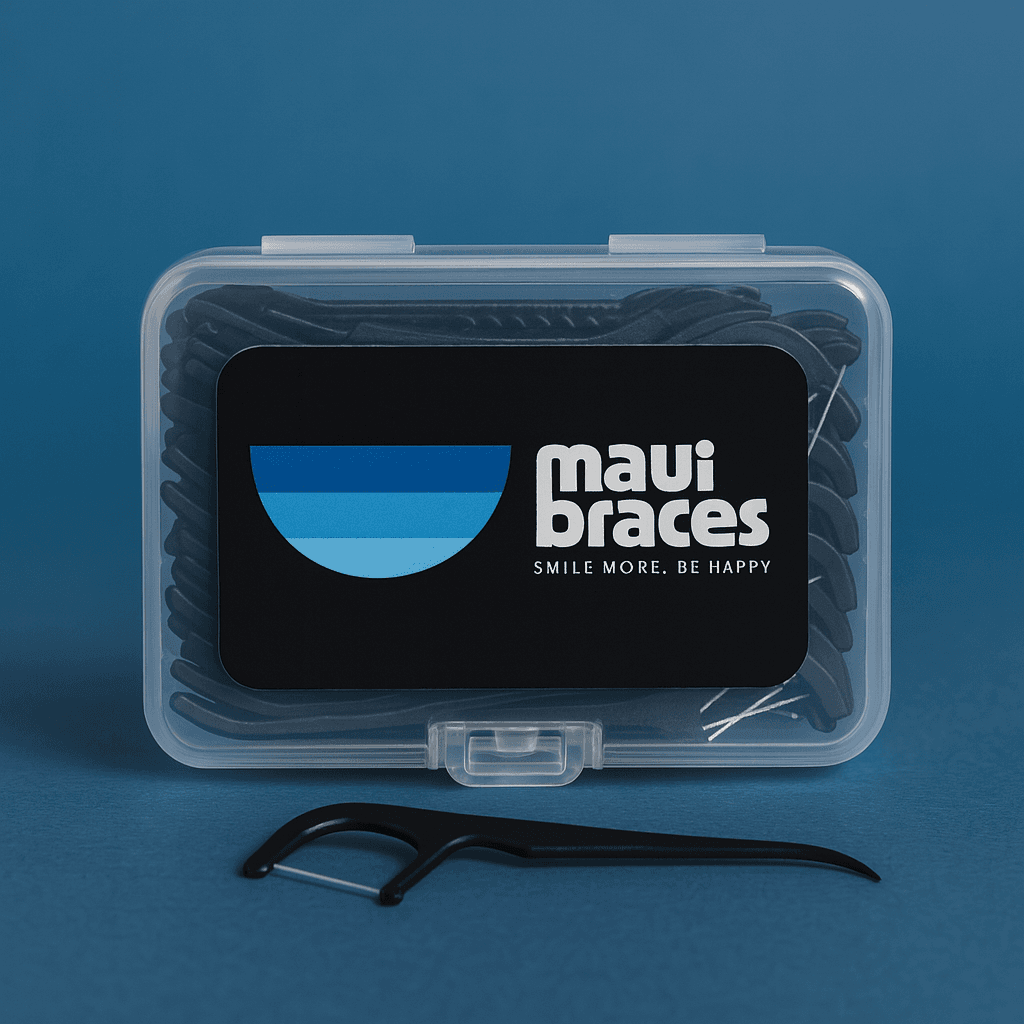
Maui Braces branded floss picks

Foods to Avoid During Treatment

Avoiding hard, sticky, and chewy foods during treatment will reduce the number of emergency visits and help us get to the finish line as fast as possible.

Sticky Foods To Avoid

  • Gum (sugar-free or regular)
  • Licorice
  • Sugar Daddies
  • Toffee
  • Tootsie Rolls
  • Caramel
  • Starburst

Hard Foods To Avoid

  • Ice
  • Nuts
  • Hard taco shells
  • French bread crust/rolls
  • Corn on the cob
  • Apples and carrots (unless cut)
  • Bagels
  • Chips
  • Jolly Ranchers
  • Pizza crust

Sugar & Acid To Minimize

  • Cake
  • Ice cream
  • Cookies
  • Pie
  • Candy
  • Soda
  • Sweetened tea
  • Gatorade
  • Kool-Aid
  • Drinks with sugar

Frequently Asked Questions

Find answers to the most frequent inquiries from our patients.

Getting Started at Maui Braces

What is orthodontic treatment?
Orthodontic treatment aligns teeth and corrects bite issues using braces, clear aligners, or other appliances to improve oral health and appearance.
How do I know if I need braces or clear aligners?
Your orthodontist will evaluate your teeth alignment, bite, and jaw structure to recommend the best treatment option. Schedule a free consultation at Maui Braces, no referral needed.
What is the difference between an orthodontist and a dentist?
Orthodontists are dental specialists focused on correcting misalignments in teeth and jaws. They complete a specialized 2 to 3 year residency after dental school. Both Dr. Verga and Dr. Conmy are board-certified Diplomates of the American Board of Orthodontics.
What are the risks of not treating orthodontic issues?
Untreated orthodontic issues can lead to tooth decay, gum disease, jaw pain, and difficulty chewing or speaking over time.
Does Maui Braces have multiple office locations?
Yes. Maui Braces has two locations: our main office in Kahului at 285 W Kaahumanu Ave Suite 220, open Monday, Tuesday, Thursday, and Friday, and our Upcountry office in Makawao at 1037 Makawao Ave, open every Wednesday. A third location in Lahaina is temporarily closed following the August 2023 wildfire. West Maui patients are warmly welcomed at our Kahului office.
Do I need a referral to see an orthodontist at Maui Braces?
No referral is needed. You can book a free consultation directly, no dentist referral required. Call or text (808) 874-9229 or book online. We welcome patients of all ages from across Maui, including Kahului, Wailuku, Kihei, Makawao, Wailea, Paia, and West Maui.
Can I start braces the same day as my consultation?
Yes. Same-day braces are available at Maui Braces. If you are current on dental cleanings and do not have pending dental work, we can place braces the same day as your free consultation. No second visit needed. Just bring your down payment and we will take care of the rest.
What happens at the free consultation at Maui Braces?
Your free consultation includes a full set of digital X-rays and high-resolution photos, a complete exam with Dr. Alex or Dr. Conmy, a personalized treatment recommendation, and a full cost breakdown including your insurance benefits. The visit takes approximately 60 to 90 minutes. There is no obligation to begin treatment.
Does Maui Braces serve patients from West Maui and Lahaina?
Yes. West Maui patients from Kaanapali, Napili, Lahaina, and surrounding areas are warmly welcomed at our Kahului office. Our Lahaina office is temporarily closed following the August 2023 wildfire. Kahului is approximately 45 minutes from West Maui and well worth the drive for board-certified orthodontic care.

Costs, Financing and Insurance

How much does orthodontic treatment cost, and is financing available?
Braces at Maui Braces typically range from $4,500 to $8,500 depending on the complexity of the case. We offer 0% financing with down payments as low as $350 and monthly payments as low as $200 per month. Learn more about payment options.
Will my insurance cover braces or clear aligners?
Many insurance plans offer partial coverage for orthodontic treatment. Maui Braces works with all insurance plans that include an orthodontic benefit, including HMSA, HMAA, Kaiser, and Hawaii Dental Service. We verify your benefits before your consultation. See insurance and payment details.
What is the cost difference between braces and clear aligners?
Costs depend on treatment complexity. Clear aligners are comparable to traditional braces but may be slightly more expensive due to lab fees. Flexible payment plans and 0% financing are available for both options.
What is the down payment for braces at Maui Braces?
Down payments at Maui Braces start as low as $350 for most treatment plans. The exact down payment depends on your specific treatment plan and the amount covered by your insurance benefits. Your treatment coordinator will walk through all payment options at your free consultation before you make any decisions. There is no obligation.
Does Maui Braces offer 0% interest financing?
Yes. Maui Braces offers in-house 0% interest financing on all orthodontic treatment plans. Monthly payments start as low as $200 per month for Phase I kids treatment and $250 per month for teen and adult treatment. There are no hidden fees or interest charges. Payments are made directly to our office, not through a third-party finance company.
Does FSA or HSA cover orthodontic treatment?
Yes. Orthodontic treatment is an eligible expense under most Flexible Spending Accounts (FSA) and Health Savings Accounts (HSA). This means you can use pre-tax dollars to pay for braces or Invisalign, effectively reducing the cost by your marginal tax rate. We recommend confirming with your plan administrator, as coverage rules vary. Our team can provide itemized receipts for FSA and HSA reimbursement submissions.
Does Maui Braces offer family discounts?
Yes. Maui Braces offers sibling discounts for families with multiple children in active treatment. Ask our treatment coordinator about family pricing at your consultation. We serve many Maui families across multiple generations and want to make treatment as accessible as possible for every household.
What Hawaii insurance plans cover orthodontic treatment?
Maui Braces works with all insurance plans that include an orthodontic benefit. Hawaii plans that commonly include orthodontic coverage include HMSA Dental Blue, HMAA, Kaiser Permanente Hawaii Dental, Hawaii Dental Service (HDS), EUTF, HSTA, and most federal employee plans. Our team verifies your specific benefits before your visit so you know exactly what is covered before treatment begins.

Kids and Phase I Treatment

At what age should my child see an orthodontist?
The American Association of Orthodontists recommends an initial visit by age 7 to address early signs of misalignment. Maui Braces offers free growth monitoring for all kids 7 and up, no referral needed.
What is Phase I orthodontic treatment?
Phase I, also called early treatment, is orthodontic treatment for children ages 6 to 10 who have a mix of baby and permanent teeth. It addresses significant jaw growth problems, severe crowding, crossbites, underbites, and habits like thumb sucking before they become more complex. Phase I does not always prevent the need for braces later, but it can reduce treatment time and complexity significantly. Most Phase I cases at Maui Braces range from $4,500 to $5,000.
What is Phase II orthodontic treatment?
Phase II is comprehensive orthodontic treatment, typically braces or clear aligners, that begins after all or most permanent teeth have erupted, usually around ages 11 to 14. If a child had Phase I treatment earlier, Phase II fine-tunes alignment and bite once the adult teeth are in. For children who did not need Phase I, Phase II is simply their first and only course of orthodontic treatment.
My child had Phase I treatment. Do they still need braces later?
Often yes. Phase I addresses specific jaw growth problems during the growth window, but it rarely eliminates the need for comprehensive treatment later. Think of Phase I as laying the best possible foundation. When all the permanent teeth are in, Phase II aligns everything to its ideal final position. At Maui Braces, Phase I patients receive a credit toward Phase II treatment. Dr. Alex will be upfront about what to expect at every step.

Airway Orthodontics

What is airway orthodontics?
Airway orthodontics is an approach to orthodontic treatment that considers the airway, nasal breathing, and oral posture alongside tooth and jaw alignment. The position of the jaws, the width of the palate, and the posture of the tongue all influence how well a patient breathes through their nose. A narrow palate or underdeveloped upper jaw can restrict nasal airflow and contribute to mouth breathing, which has downstream effects on sleep quality, facial development, and overall health. Dr. Alex evaluates airway indicators at every growth check and consultation.
What are the signs that my child may have an airway problem related to their jaw development?
Common signs include chronic mouth breathing, snoring, restless sleep, dark circles under the eyes, a narrow or high-arched palate, crowded teeth despite adequate jaw size, forward head posture, and a long narrow face shape. Children who mouth breathe chronically often develop a specific facial pattern over time as the jaw and palate are shaped partly by tongue posture and airflow. If you notice these signs in your child, an orthodontic evaluation is an important first step.
Can orthodontic treatment improve nasal breathing?
Yes, in many cases. Widening the upper jaw with a palate expander creates more space in the nasal cavity above, which can significantly improve nasal airflow. Studies show that palate expansion consistently reduces nasal airway resistance in children. For adults with more significant skeletal restriction, MARPE (Micro-implant Assisted Rapid Palate Expansion) can achieve skeletal expansion of the palate and nasal floor even after growth is complete. Improving nasal breathing is one of the most meaningful health outcomes of early orthodontic intervention.
Can orthodontic treatment help a child who snores or has sleep-disordered breathing?
Orthodontic treatment can be an important part of addressing sleep-disordered breathing in children. A narrow palate and underdeveloped jaws reduce the space available for the tongue and airway, contributing to snoring and obstructive sleep apnea. Palate expansion and jaw development treatment during growth can increase airway dimensions and reduce the severity of sleep-disordered breathing. This does not replace evaluation by a sleep specialist, but orthodontics and airway medicine work hand in hand. Dr. Alex coordinates with physicians when airway is a concern.

Palate Expanders

What is a palate expander and does my child need one?
A palate expander is an orthodontic appliance that widens the upper jaw to create more space for teeth and improve jaw alignment. It works by applying gentle pressure to the growth plate in the roof of the mouth, which is still open and responsive in children. Expanders are most effective between ages 7 and 12. Dr. Alex will assess whether your child is a candidate at their free growth check.
How does a palate expander work?
A palate expander applies gradual outward pressure to the two halves of the upper jaw, which are connected at the midpalatal suture. In children and young teens, this suture has not yet fused and responds to gentle expansion forces by generating new bone in the middle as the two halves separate. This widens the palate, creates space for crowded teeth, corrects crossbites, and increases the volume of the nasal cavity above. The process is gradual, typically one to two turns of the expansion key per week over several months.
Is a palate expander painful?
Most children describe a feeling of pressure or tightness after each activation, which typically resolves within 15 to 20 minutes. A gap between the front teeth is normal and expected during expansion as the two halves of the jaw separate. This gap closes naturally once expansion is complete and the suture fills in with new bone. Speech may be slightly affected for the first week or two. Overall, palate expanders are well tolerated, and children adapt quickly.
How long does a child need to wear a palate expander?
The active expansion phase typically lasts two to four months, during which the expander is turned on the prescribed schedule. After the target expansion is achieved, the expander is left in place for an additional four to six months as a retainer while the bone consolidates and hardens across the midpalatal suture. Removing it too early can result in relapse. Total time with the expander in the mouth is typically six to ten months depending on the case.
What is the difference between a removable and a fixed palate expander?
Fixed expanders are bonded or banded to the upper molars and cannot be removed by the patient. They are the most reliable option because expansion occurs whether or not the patient cooperates with wearing it. Removable expanders are taken out for eating and cleaning and rely on patient compliance. For significant skeletal expansion, fixed expanders are almost always preferred. Dr. Alex will recommend the appropriate type based on the degree of expansion needed and the patient's age and cooperation level.

Distalizers and Pendex

What is a distalizer in orthodontics?
A distalizer is an orthodontic appliance that moves upper back teeth (molars) backward to create space in the dental arch. When upper molars are too far forward relative to the lower jaw, the result is a Class II bite or overbite. Moving the upper molars distally (backward) corrects this without extracting permanent teeth. Distalizers are most effective during active growth and can eliminate the need for tooth removal in many cases. They are typically part of a Phase I treatment plan in children and early teens.
What is a Pendex appliance and what does it do?
The Pendex is a fixed intraoral distalizer combined with a palate expander. It moves the upper molars backward while simultaneously widening the upper arch, addressing both the front-to-back relationship and the width of the palate in one appliance. This makes the Pendex particularly efficient for children with crowding, a narrow palate, and upper molars that are positioned too far forward. By creating space and correcting molar position during growth, the Pendex can often set up ideal conditions for comprehensive braces later and reduce overall treatment complexity.
How does a Pendex or distalizer help avoid tooth extractions?
One of the most common reasons orthodontists recommend tooth extractions is insufficient arch space. If the upper molars are positioned too far forward, they crowd the teeth in front of them and there is no room for the remaining teeth to align. A distalizer or Pendex creates that space by moving the molars backward, working with the body's available jaw structure rather than removing permanent teeth. When used during growth, this approach takes advantage of the patient's natural development and often achieves results that would require surgery or extractions in an adult.
At what age is a Pendex or distalizer most effective?
Distalizers and Pendex appliances are most effective between ages 7 and 12, during the mixed dentition phase when baby teeth are still present and the second molars have not yet fully erupted. This window allows the molars to be repositioned without resistance from adjacent permanent teeth. As a patient moves into the teen years and the second molars erupt fully, the tooth movement becomes more complex. This is why early evaluation at age 7 is so important, as Dr. Alex can identify patients who would benefit most from this type of intervention while the timing is ideal.

MARA Appliance and Overbite Correction

What is a MARA appliance?
The MARA, which stands for Mandibular Anterior Repositioning Appliance, is a fixed functional appliance used to correct Class II bites in growing patients by positioning the lower jaw forward. It works by holding the lower jaw in a forward position, which stimulates the condyle (the ball of the jaw joint) to grow in the forward direction. Unlike removable functional appliances that rely on patient cooperation, the MARA is fixed to the upper and lower molars and works continuously. This makes it one of the most reliable functional appliances for overbite correction in growing patients.
What kind of overbite does a MARA correct?
The MARA is designed for skeletal Class II overbites, where the position of the lower jaw is behind where it should be relative to the upper jaw. This is different from a dental Class II overbite caused purely by tooth position. When the lower jaw is underdeveloped or positioned too far back, braces and rubber bands alone can only do so much. The MARA uses the patient's remaining growth to bring the lower jaw forward to its ideal position, improving both the bite and the facial profile. Dr. Alex will determine whether your child's overbite has a skeletal or dental cause at their consultation.
At what age is a MARA most effective for overbite correction?
The MARA is most effective during the peak growth phase, which for most patients is between ages 10 and 14. Boys typically peak slightly later than girls. The appliance works by redirecting the growth that is already occurring, so using it during peak growth delivers the greatest skeletal change in the shortest time. Used outside the growth window, the same appliance produces primarily dental movement rather than skeletal change, which is less stable long-term. Early identification of candidates during annual growth monitoring allows treatment to be timed precisely to this window.
How long does a patient wear a MARA?
Most patients wear a MARA for 9 to 14 months, depending on the severity of the Class II relationship and the patient's rate of growth. The MARA is typically used alongside braces as part of a comprehensive treatment plan. Dr. Alex monitors jaw position and growth progress at regular appointments to determine when the MARA's goals have been achieved. After removal, the new jaw position is maintained with braces and elastic wear during the finishing phase of treatment.

MARPE for Adults

What is MARPE?
MARPE stands for Micro-implant Assisted Rapid Palate Expansion. It is a palate expansion technique specifically designed for adults and older teens whose midpalatal suture has fused and can no longer be expanded with a traditional palate expander. Four small temporary anchors (mini-screws) are placed in the palate under local anesthesia, and a specialized expansion device is attached to them. The anchors allow the expansion force to act directly on the bone rather than on the teeth, making true skeletal palate expansion possible in adults without jaw surgery.
Who is a candidate for MARPE?
MARPE is appropriate for adults and older teens (typically 18 and older) who have a narrow palate, crossbite, nasal breathing obstruction, or crowding that would benefit from skeletal arch expansion. It is commonly used for patients who were told they would need jaw surgery to widen their palate, as MARPE can often achieve similar results less invasively. Candidates need adequate bone density in the palate and cannot have significant bone defects or certain medical conditions. A cone beam CT scan is used to evaluate bone quality before recommending MARPE.
How is MARPE different from a traditional palate expander?
A traditional palate expander works on teeth (or teeth plus the palate) and is only effective when the midpalatal suture is still open, typically before age 15 to 16. After the suture fuses, forces from a tooth-borne expander simply tip the teeth outward without expanding the underlying bone. MARPE uses mini-screws anchored directly in the palatal bone to apply expansion forces to the skeletal structure itself, separating the fused suture gradually and allowing new bone to form in the space. This is the key distinction: traditional expanders are dento-alveolar, MARPE is skeletal.
Is MARPE painful?
The mini-screw placement procedure is performed under local anesthesia and is generally well tolerated. Soreness and pressure in the palate and across the bridge of the nose are common during the first few days of expansion and after each activation. Most adults describe the experience as uncomfortable but manageable. Some patients notice a gap forming between the upper front teeth during expansion, which is expected and closes after expansion is complete. Over-the-counter pain relievers are typically sufficient for discomfort management.
Can MARPE help with breathing problems in adults?
Yes. Because the palate forms the floor of the nasal cavity, expanding it with MARPE increases nasal airway volume. Multiple clinical studies have demonstrated improvements in nasal airflow, reductions in nasal airway resistance, and in some cases reductions in the severity of obstructive sleep apnea following MARPE treatment. For adults with a narrow palate and documented nasal obstruction or mild to moderate sleep apnea, MARPE can be a meaningful intervention that produces both functional and aesthetic improvements.

Specific Bite Conditions

Can orthodontic treatment fix my bite?
Yes. Orthodontic treatments like braces and aligners can correct overbite, underbite, crossbite, and open bite to improve both function and aesthetics. See our treatment options.
Can orthodontic treatment help with jaw pain or TMJ?
Orthodontics can improve bite alignment, which may relieve TMJ symptoms and reduce jaw pain for many patients.
Can braces correct gaps between teeth?
Yes. Braces and aligners are effective at closing gaps, providing a more even and aesthetically pleasing smile.
Can orthodontic treatment fix an overbite?
Yes. An overbite, where the upper front teeth overlap significantly over the lower front teeth, is one of the most common conditions treated at Maui Braces. Treatment typically involves braces or clear aligners combined with rubber bands to reposition the jaw. The severity of the overbite determines whether treatment can be done with aligners alone or requires fixed braces. Dr. Alex will assess your specific case at your free consultation.
Can braces fix an underbite?
Yes, in many cases. An underbite occurs when the lower jaw extends further forward than the upper jaw. In children and teens, this can often be corrected with orthodontic treatment alone, particularly when caught early during the growth phase. In adults with severe skeletal underbites, orthodontic treatment may be combined with jaw surgery for the best outcome. Dr. Alex will explain all options at your consultation.
Can orthodontic treatment help with crowded teeth?
Yes. Crowding is the most common orthodontic problem and is treatable at any age with braces or clear aligners. In children, early monitoring can allow us to guide growth and make space before crowding becomes severe. In teens and adults, treatment creates space through careful tooth movement. In some cases, tooth extraction may be recommended to create adequate space, though modern techniques often avoid this.
Can orthodontic treatment help with sleep apnea or airway issues?
Orthodontic treatment can play a role in addressing certain airway concerns, particularly in children. Palate expanders can widen the airway and improve nasal breathing. Early intervention for jaw growth imbalances can reduce the risk of obstructive sleep apnea later in life. If you or your child has signs of mouth breathing, snoring, or disrupted sleep, Dr. Alex will assess whether orthodontic treatment may help.
Can braces fix a crossbite?
Yes. A crossbite occurs when upper teeth sit inside the lower teeth on one or both sides. It is one of the most important bite problems to address because untreated crossbites can cause asymmetric jaw growth, tooth wear, and gum recession. In children, a palate expander combined with braces is often the most effective approach. In adults, braces or clear aligners can correct crossbites in most cases.
Can orthodontic treatment fix an open bite?
Yes. An open bite is when the upper and lower front teeth do not touch when biting down. It is often caused by thumb sucking, tongue thrusting habits, or skeletal jaw development. In children, addressing the habit and using orthodontic appliances can resolve an open bite effectively. In adults, braces or clear aligners can improve open bites significantly, though severe skeletal cases may require additional intervention. Dr. Alex will evaluate your specific situation at your consultation.
What is a deep bite and can it be corrected?
A deep bite, also called a deep overbite, is when the upper front teeth overlap too far over the lower front teeth vertically, sometimes covering them almost entirely. It can cause excessive wear on the lower teeth and gum irritation. Braces and clear aligners can both address deep bites effectively by opening the bite to a healthy overlap. Deep bites in children are often easier to correct during growth.
Can orthodontics correct protruding front teeth?
Yes. Protruding front teeth, sometimes called buck teeth, are typically caused by a combination of jaw position and tooth angle. Braces and rubber bands can move the upper teeth back and align the jaw effectively. In children and teens, treatment during growth can be particularly effective. Protruding front teeth also carry a higher risk of dental injury, which is another reason early evaluation is important.
What causes an underbite?
Underbites have two main causes: dental and skeletal. A dental underbite is caused by individual teeth being tipped in the wrong direction, with lower front teeth angled too far forward or upper front teeth angled too far backward. A skeletal underbite is caused by a size or position discrepancy between the upper and lower jaws, most commonly an overdeveloped lower jaw or an underdeveloped upper jaw. Many underbites are a combination of both. The distinction matters because it determines what treatment is most appropriate and how much growth modification is possible.
Why is it important to treat an underbite early in children?
The lower jaw continues growing longer than the upper jaw and continues into the late teens. If an underbite is left untreated, the lower jaw keeps growing forward while the upper jaw is already at its adult position, making the discrepancy progressively worse. Treating an underbite during growth allows the upper jaw to be encouraged forward and the lower jaw to be managed, sometimes eliminating what would otherwise require jaw surgery in adulthood. Early detection during the age 7 growth check is critical for underbite management.
What is a reverse pull headgear and how does it correct an underbite?
A reverse pull headgear, also called a facemask or protraction headgear, is an external appliance worn for 12 to 14 hours per day that applies forward traction to the upper jaw. It attaches to a framework around the face with elastic bands connected to hooks on an expander or braces inside the mouth. The forward force encourages the upper jaw to grow forward and can correct the jaw relationship when used during the growth phase, typically between ages 7 and 10. It is often combined with a palate expander to maximize skeletal response. Compliance is critical since the appliance only works when it is being worn.
Can an underbite be fixed without surgery in adults?
It depends on the severity and cause. Mild to moderate dental underbites in adults can often be corrected with braces or clear aligners, repositioning the teeth into proper alignment without modifying the jaw itself. Moderate skeletal underbites can sometimes be camouflaged effectively with orthodontics, particularly if the patient is comfortable accepting a dental rather than skeletal correction. Severe skeletal underbites caused by significant jaw size discrepancy typically require orthognathic jaw surgery combined with orthodontic treatment to achieve both functional and aesthetic correction. Dr. Alex will be direct about which category applies to your case at the consultation.
What happens if an underbite is not treated?
Untreated underbites tend to worsen over time as the lower jaw continues growing. The long-term consequences include uneven wear on the front teeth from the abnormal bite relationship, increased difficulty chewing, jaw joint problems as the joint works in an abnormal position, speech issues, and in more severe cases significant facial asymmetry. The earlier an underbite is identified and addressed, the more options are available and the less invasive the treatment needed.
What is the difference between a skeletal and a dental malocclusion?
A dental malocclusion means the teeth are positioned incorrectly but the underlying jaw bones are in good relationship with each other. This type is typically treated with braces or clear aligners alone. A skeletal malocclusion means the jaw bones themselves are not in proper relationship, either in size, position, or both. Skeletal problems require either growth modification during childhood (expanders, functional appliances) or jaw surgery in adulthood for definitive correction. Braces can camouflage mild skeletal issues, but the underlying bone relationship remains. Understanding this distinction determines the most appropriate long-term treatment plan.
What is a Class II bite and how is it treated?
A Class II bite, commonly called an overbite, is where the upper jaw and upper teeth are positioned too far forward relative to the lower jaw. It is the most common orthodontic problem requiring intervention beyond simple alignment. In children and teens, Class II correction uses growth modification appliances like the MARA, rubber bands, or distalizers depending on the cause and severity. In adults, Class II correction relies on tooth movement with braces or aligners combined with elastics, or in severe cases, jaw surgery to move the lower jaw forward. Dr. Alex will assess both the dental and skeletal components of your bite at your consultation.

Treatment Types and Technology

What are my options besides metal braces?
We offer discreet options including Invisalign clear aligners, Spark clear aligners, and ceramic braces.
What are self-ligating braces?
Self-ligating braces use a built-in sliding mechanism to hold the wire instead of the elastic ties used with traditional braces. This reduces friction, allows teeth to move more freely, and typically results in fewer and shorter appointments. Maui Braces uses self-ligating braces as our standard, which is one reason our patients experience approximately 30% fewer appointments than traditional orthodontic offices.
What is Spark clear aligner and how does it compare to Invisalign?
Spark is a premium clear aligner system made by Ormco, one of the most respected names in orthodontics. Spark aligners are made from TruGEN material, which is clinically shown to be clearer and more stain-resistant than Invisalign trays over time. Both systems are excellent. Dr. Alex will recommend the better fit for your specific case and bite complexity at your consultation.
What are ceramic braces?
Ceramic braces work exactly like metal braces but use tooth-colored or clear ceramic brackets that blend with your natural tooth color, making them much less visible. They are a popular option for adults and teens who want the effectiveness of fixed braces with a more discreet appearance. Ceramic brackets are slightly more fragile than metal and require more careful cleaning. Dr. Alex will advise if they are appropriate for your case.

Invisalign and Clear Aligners

How do clear aligners work to straighten teeth?
Clear aligners are a series of custom-fitted trays that gradually shift teeth into alignment. Aligners are typically changed every 10 to 14 days for progressive adjustment.
How often should I clean my aligners?
Clean aligners daily with a soft brush and lukewarm water to prevent bacteria buildup and staining. Avoid hot water, which can warp the plastic.
Can I eat and drink normally with Invisalign?
Yes, with one important rule: remove your aligners before eating or drinking anything other than plain water. Unlike braces, Invisalign has no food restrictions because the aligners come out entirely at mealtimes. Simply remove them, eat what you like, brush your teeth, and put them back in. Aligners should be worn 22 hours per day for best results, so meal and cleaning time should be kept efficient.
How many hours per day do I need to wear Invisalign?
Invisalign aligners should be worn 22 hours per day for treatment to progress on schedule. The 2 hours of daily out-of-tray time is for eating, drinking anything other than water, and cleaning your teeth. Wearing aligners less than 22 hours per day is the most common reason Invisalign treatment runs longer than expected. Most Maui Braces Invisalign patients change trays every 10 to 14 days.
What happens if I lose an Invisalign tray?
Contact us as soon as possible at (808) 874-9229. In most cases we will advise you to either go back to the previous tray or move to the next tray, depending on where you are in your sequence. If the tray needs to be replaced, we can order a replacement. Do not leave the gap unfilled for more than a few days, as teeth can shift back quickly. This is why we recommend keeping your previous tray as a backup.
Am I a good candidate for Invisalign?
Most teens and adults are candidates for Invisalign. It works well for crowding, spacing, overbites, underbites, crossbites, and open bites across a wide range of complexity. Cases that are too complex for aligners alone may be better suited for traditional braces, though this represents a small minority of patients. The best way to know is a free consultation with Dr. Alex, who will evaluate your specific bite and tooth positions.
Is Invisalign as effective as traditional braces?
For the majority of cases, yes. Modern Invisalign technology with attachments and precision cutouts can achieve results comparable to traditional braces. Braces maintain a slight advantage for the most complex cases requiring precise three-dimensional tooth control. However, patient compliance is the biggest factor in Invisalign outcomes. Aligners worn 22 hours per day consistently outperform braces where patients frequently break brackets or miss appointments.

The Treatment Process

How long does orthodontic treatment usually take?
Comprehensive treatment typically ranges from 12 to 30 months depending on the complexity of the case. Keeping everything clean, wearing rubber bands as instructed, and not skipping appointments can help shorten treatment time.
Is orthodontic treatment painful?
Some discomfort is normal after adjustments, but it usually subsides within a few days. Orthodontic wax, saltwater rinses, and over-the-counter pain relievers can help.
How often will I need to visit the orthodontist during treatment?
Appointments are typically every 8 to 12 weeks depending on where you are in treatment. Maui Braces uses advanced techniques that result in approximately 30% fewer appointments than most offices.
How soon can I see results from orthodontic treatment?
Minor changes can appear within a few months, but full results require the complete treatment duration, typically between 12 and 24 months.
How can I reduce discomfort from braces?
Using orthodontic wax, saltwater rinses, and over-the-counter pain relievers can help ease discomfort after adjustments. Most soreness resolves within two to three days.
Does getting braces put on hurt?
The process of bonding braces to your teeth does not hurt. Your teeth are cleaned and dried, then the brackets are glued on and the wire is placed. You may feel some pressure but no pain during the appointment itself. Soreness typically begins a few hours after the appointment and peaks around day two. Most patients describe it as a dull pressure or sensitivity when biting. Over-the-counter pain relievers and soft foods help considerably.
What are rubber bands used for in orthodontic treatment?
Rubber bands, also called elastics, are used to correct bite problems by applying pressure between the upper and lower jaws. They are attached to hooks on the brackets and worn in specific configurations determined by Dr. Alex based on your bite. Rubber band compliance is critical. Wearing them as prescribed moves your treatment forward. Skipping days extends treatment significantly. Most rubber band phases last three to six months.
Does Maui Braces use digital scanning instead of impressions?
Yes. Maui Braces uses the 3Shape TRIOS digital scanner for all records, eliminating the need for traditional putty impressions. Digital scanning is faster, more comfortable, and more accurate. The scanner captures a precise 3D model of your teeth in minutes, which is used for treatment planning, aligner fabrication, and retainer design. No gagging, no mess, no waiting for impressions to set.
What are Invisalign attachments and will I need them?
Invisalign attachments are small tooth-colored bumps bonded to specific teeth to give the aligners something to grip for more controlled tooth movement. They are matched closely to your tooth color and are barely noticeable. Not all Invisalign patients need attachments, but they are common for more complex movements such as rotations and vertical shifts. Dr. Alex will tell you at your consultation whether your treatment plan requires them.
What are orthodontic refinements and how do they work?
Refinements are additional sets of aligners prescribed during or near the end of Invisalign treatment to make fine adjustments that were not fully achieved with the original set of trays. They require a new scan and are planned digitally. Refinements are a normal part of Invisalign treatment and are included in your treatment plan at Maui Braces, not billed as an extra. Most Invisalign cases have at least one round of refinements.

Oral Hygiene and Care

How do I care for my teeth with braces or aligners?
Regular brushing with an electric toothbrush, flossing with special tools, and using mouthwash help maintain oral hygiene. Avoid hard and sticky foods with braces, and continue to see your dentist for regular cleanings during treatment.
What foods should I avoid with braces?
Avoid sticky, chewy, and hard foods including gum, licorice, caramel, ice, nuts, hard taco shells, and popcorn to prevent damage to your braces and reduce emergency visits.
Do I still need to see my regular dentist during orthodontic treatment?
Yes, and this is very important. We recommend continuing regular dental cleanings every six months during orthodontic treatment, or more frequently if recommended by your dentist. Braces create more areas where plaque can accumulate, increasing the risk of cavities and gum disease. Orthodontic treatment cannot proceed safely if there are active dental issues. We coordinate closely with your general dentist throughout your treatment.
What are white spot lesions and how do I prevent them?
White spot lesions are areas of permanent enamel damage caused by plaque buildup around brackets during treatment. They appear as chalky white marks on the tooth surface and are one of the most common regrettable outcomes of braces when oral hygiene is poor. Prevention is straightforward: brush after every meal, floss daily, use fluoride toothpaste, and attend all hygiene appointments with your dentist. Maui Braces recommends a water flosser and interproximal brushes as standard tools during treatment.
What cleaning tools do I need for braces?
We recommend an electric toothbrush, a water flosser, interproximal brushes (small cone-shaped brushes for cleaning between brackets and under wires), braces floss picks or floss threaders, and fluoride mouthwash. This combination takes about five to seven minutes per session. Good oral hygiene during treatment protects your enamel and makes the final result as beautiful as possible. We provide a hygiene kit and instructions at your bonding appointment.

Lifestyle During Treatment

Can I play sports with braces?
Yes. We recommend wearing a mouthguard to protect your braces and mouth from injury during contact sports. Invisalign aligners can be removed for sports entirely.
Can I whiten my teeth while wearing braces?
Whitening can be done with clear aligners but is best performed after removing traditional braces to ensure even results. Learn about our whitening options.
Will my speech be affected by braces or aligners?
Speech may be slightly affected initially, but most patients adjust within a few days as they adapt to the appliance.
Can I travel during orthodontic treatment?
Yes. Many Maui Braces patients travel regularly during treatment, including mainland and international travel. For braces patients, we provide wax, extra elastics, and an emergency kit before extended trips. For Invisalign patients, we can provide extra trays to cover time away. If you have a travel schedule, let us know at your consultation and we will plan appointments accordingly.
What should I do if a bracket breaks or wire comes loose?
Call or text us at (808) 874-9229 as soon as possible. A broken bracket or loose wire is not an emergency but should be addressed promptly to avoid treatment delays. In the meantime, use orthodontic wax to cover any sharp points that are causing irritation. Avoid hard or sticky foods that could cause further damage. We will schedule you for a repair appointment as quickly as possible.
Can I play a musical instrument with braces?
Yes, though there is typically an adjustment period of one to two weeks. Brass and woodwind players most commonly notice a difference initially as they adapt to the feel of brackets. Most musicians fully adjust and return to their prior skill level within a few weeks. Orthodontic wax can help with initial discomfort on the lips and inner cheeks. Invisalign is an option if this is a significant concern, as aligners have a lower profile and are smoother than brackets.

Post-Treatment and Retainers

Will I need to wear a retainer after braces?
Yes. Retainers are essential to maintain your results. Retainer wear is typically lifelong, starting with full-time wear then transitioning to nighttime only. Ask us about our Lifetime Retainer Plan.
How long do I need to wear a retainer after braces?
Retainer wear is typically lifelong. Starting with full-time wear after braces, then transitioning to nighttime wear to maintain alignment. As long as you want straight teeth, wear your retainer.
What if I lose or break a retainer?
Contact Maui Braces as soon as possible to get a replacement retainer and avoid shifting of teeth. Ask us about our Lifetime Retainer Plan, which includes additional retainers at only $15 each.
What is the Lifetime Retainer Plan?
The Lifetime Retainer Plan includes 3 sets of retainers with additional retainers at only $15 each, ensuring your smile stays straight without the hassle of needing braces again.
What happens when braces come off?
The removal process, called debonding, takes about 30 to 45 minutes. Dr. Alex uses a special tool to gently remove each bracket, then polishes your teeth to remove any remaining adhesive. You will then be fitted for retainers, which you will start wearing that same day. Most patients are surprised at how smooth and clean their teeth feel immediately after debonding.
Will my teeth shift if I stop wearing my retainer?
Yes. Teeth naturally drift over time when retainers are not worn. This is one of the most common reasons adults seek orthodontic retreatment. The good news is that nighttime retainer wear is all it takes to hold your results for life. If you have stopped wearing your retainer and notice shifting, contact us immediately. The sooner we address it, the easier and less expensive the correction.
What is a bonded or permanent retainer?
A bonded retainer is a thin wire glued to the back surfaces of your front teeth, holding them in place without any effort from the patient. It is invisible from the outside and does not need to be removed. Bonded retainers are often recommended for patients whose teeth had significant spacing or crowding, or for those who may not reliably wear a removable retainer. Dr. Alex will recommend whether a bonded retainer is right for your case.
My teeth shifted after previous orthodontic treatment. Can Maui Braces help?
Yes. Adult retreatment is common and straightforward in most cases. If your teeth were previously treated but have shifted over time, we can re-treat with braces or clear aligners. Many retreatment cases are shorter than original treatment. Schedule a free consultation and Dr. Alex will assess where things stand and what it would take to get your smile back.

Orthodontic Emergencies

What counts as an orthodontic emergency?
True orthodontic emergencies are rare. They include severe pain that does not respond to over-the-counter pain relievers, trauma to the mouth or teeth, a swallowed wire or bracket, or significant swelling. Broken brackets, loose wires, and poking wires are common inconveniences that can usually wait a day or two until we can schedule a repair. For any urgent situation, call or text us at (808) 874-9229 and we will advise you on next steps. See our emergency guide.
What should I do if a wire is poking my cheek?
Use the eraser end of a pencil or a clean cotton swab to push the wire gently back against the tooth. Cover the end of the wire with orthodontic wax to cushion it against the inside of your cheek. If the wire is significantly protruding, use a clean nail clipper or small scissors to cut it as close to the bracket as possible. Contact us to schedule a wire adjustment at your earliest convenience. Do not ignore persistent wire irritation as it can cause sores.

Adult Orthodontic Treatment

Can adults get braces or Invisalign?
Yes. Orthodontic treatment is effective for adults at any age. We offer discreet options including Invisalign, Spark clear aligners, and ceramic braces, with same-day treatment starts and no referral needed. 35% of our patients are adults. Learn more about adult treatment.
Can I get orthodontic treatment if I have crowns, veneers, or implants?
Yes, in most cases. Orthodontic treatment can work around existing dental work, though there are some considerations. Implants cannot be moved orthodontically since they are fused to the bone, so treatment is planned around them. Crowns and veneers can have braces bonded to them with special adhesives. Dr. Alex will review your dental history at your consultation and coordinate with your dentist when needed.

About Maui Braces

How long has Maui Braces been serving Maui?
Maui Braces has roots going back to 1996, when Dr. Peter Conmy established orthodontic care on Maui. Dr. Alex Verga joined and expanded the practice, building it into what is now Maui's most modern and highest-rated orthodontic office. Today Maui Braces serves families from across the island from offices in Kahului and Makawao.
Is Maui Braces the highest rated orthodontist on Maui?
Yes. Maui Braces is Maui's highest rated orthodontist with over 450 Google reviews and a 5.0 star rating. We are proud of the trust Maui families have placed in us and work hard to earn it with every patient. You can read our patient reviews on Google Maps or on our patient reviews page.

Get Braces or Invisalign on Maui — Book Your Free Consultation

Why Patients Choose Maui Braces

  • Complimentary Smile Assessment (Doctor Exam, Photos, and X-rays)

  • 0% Financing with Affordable Payment Plans

  • Board-Certified Orthodontists providing the highest level of care

  • Braces or Invisalign for even the most complex cases

  • Insurance: We work with all major providers

  • No Referral Needed

  • Locally owned and operated by Dr. Alex

We value your time. By using the most advanced orthodontic techniques, we typically have 30% less appointments than most offices.

Book Your Free Consultation

Complete the form below or call (808) 874-9229. Same-day appointments available.

Limited Consults Available Each Month. Schedule Now To Secure Your Spot.

Book Free Consult(808) 874-9229